You scrub it. You bleach it. It comes up white, and you think that's that. A few weeks later the black lines are back along the bottom of the shower, in the same places as before. So you buy a tube of silicone, run a new line over the top, and a couple of months later it's black again.
If that sounds like your bathroom, you're not doing anything wrong with the cleaning. The problem is that cleaning can't reach what's causing it. Vas, who runs the work at Handy 4 London Ltd, has spent 15 years in the trade, and black shower silicone is one of the jobs he sees most across London, in owner-occupied homes and in rented flats. This guide explains what's really going on, the way he'd explain it standing in your bathroom, so you can see why it keeps coming back and what actually stops it.
What the black actually is
It isn't dirt, and it isn't soap scum. The black in shower silicone is mould, and it isn't sitting on top of the sealant. It's growing in it.
Silicone looks solid, but it's soft and slightly porous, and a shower gives mould everything it wants: warmth, moisture that hangs around for hours, and a steady supply of food from soap, shampoo and skin. Mould spores land on the bead, find the tiny gaps and pores in the surface, and grow down into it. Over time it can also get in behind the silicone, between the sealant and the tray or tile, where you can't reach it at all.
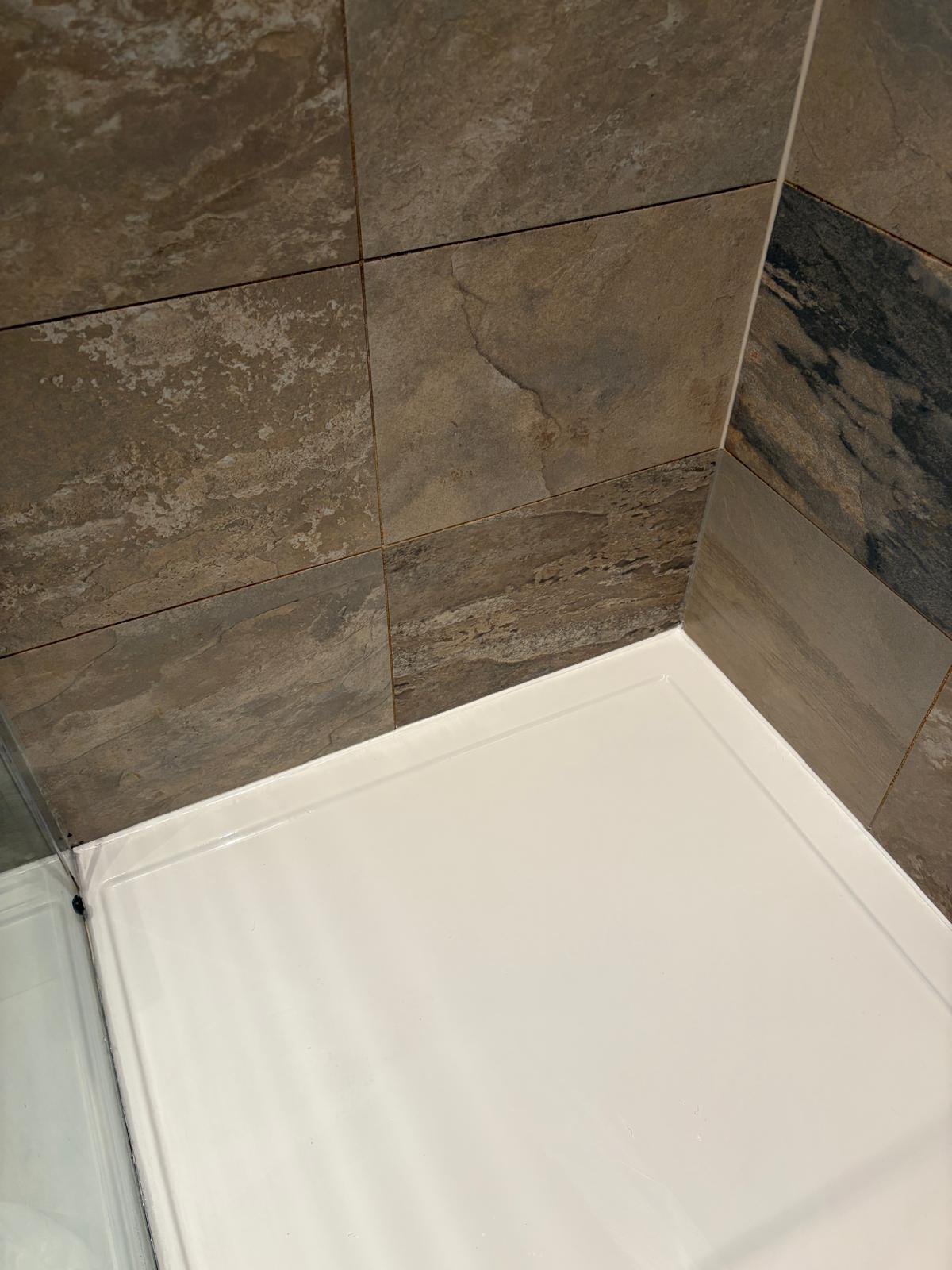
That's why the black often looks like it's under a clear skin: spots and smudges you can see but can't wipe off. You're looking at mould inside the sealant, through the top layer of the silicone itself.
Why cleaning it doesn't last
Bleach is very good at one thing: taking the colour out of what it touches. On a mouldy seal it whitens the surface and kills what's right on top, so the silicone looks clean. It doesn't get down to the mould growing inside the sealant and behind it.
Think of it like cutting a weed off at the soil. The part you can see has gone, but the roots are still in the ground. Mould is the same. The roots (the fine threads it spreads through the silicone) are still there, still damp, still being fed every time you shower. Within a few weeks they grow back up to the surface, and the black returns in exactly the same places.
Scrubbing hard makes it worse over time. It roughens the surface of the silicone and opens up more little pores for the next lot of mould to get into. Mould sprays and gels can help for longer than plain bleach, but on a seal that's already black right through, nothing you wipe on reaches deep enough to fix it. Once mould is inside the silicone, the silicone has to come out.
Why it keeps coming back
Here's the part most people never get told. Even new silicone can go black again within months, if the reason the mould grew in the first place is still there. These are the causes Vas looks for, roughly in the order he finds them.
1. New silicone over old mould (or old silicone)
This is the most common one we see. Someone runs a fresh bead of silicone straight over the old, black one, or over a joint where the old sealant was pulled off but the mould underneath was left behind. It looks perfect on day one. But all you've done is put a lid on the mould. It's still alive underneath, it's now sealed in somewhere warm and damp, and it grows straight through into the new silicone. New silicone also doesn't stick properly to old silicone or to mould, so the joint starts to lift, and water gets in behind it.
2. The wrong sealant
Not all silicone is made for showers. A tube of general-purpose or decorator's sealant from the bottom of the toolbox might look the same in the gun, but it isn't made to sit in water and steam every day. Showers and baths need a sanitary silicone, the kind made for bathrooms and kitchens with a mould inhibitor in it. Even that isn't magic: the anti-mould protection slows mould down, it doesn't make the seal immune if the room is always wet. But use the wrong product and you're starting with a seal that's built to fail.
3. Poor ventilation
Mould grows where moisture stays. If the bathroom is still steamed up half an hour after the shower, the silicone is sitting wet for half an hour, every day. That's how a seal goes black in months instead of years.
The usual reasons, in London homes especially:
- No extractor fan at all, which is common in older bathrooms and in flats where the bathroom has no window.
- A fan that's too weak. Building Regulations ask for at least 15 litres a second from a bathroom extractor that runs when you need it. Plenty of older fans are nowhere near that. It hums, but it doesn't clear the steam.
- A fan that switches off with the light, so it stops the second you leave the room, just when the steam needs clearing most.
- A fan that's blocked or clogged with dust, so it makes the noise but moves very little air.
Our bathroom planning guide explains the ventilation rules in more detail. The same lack of airflow is why mould turns up on the ceiling too, which we come to below.
4. Water getting behind the seal
Silicone is only meant to seal the joint. It can't keep water out if the water has another way in. When the bead is too thin, has gaps, or wasn't pressed properly into the joint, water runs in behind it. The same happens through cracked or missing grout next to the tray or bath, or a tray or bath that moves when you stand in it and pulls the seal away.
Once water is behind the silicone, it can't dry out. It sits in the dark, the mould grows from behind, and you see it coming through as black from the inside. This is also the cause that can do real damage, because that water doesn't just stay at the seal. Behind a shower, tiles and grout on their own aren't waterproof. As the Tile Association puts it, water-resistant adhesive and grout are no substitute for a proper waterproof tanking system, so the silicone is the last line of defence, not the first.
5. Using the shower before the silicone has cured
Fresh silicone feels dry on the surface quite quickly, but underneath it's still curing. Most sanitary silicones need around a full day before they get wet, and the exact time is printed on the cartridge. Have a shower an hour after it's done, and water and steam get into a seal that hasn't set. It can wash out, stay soft, or cure with a weak surface that mould gets into straight away. A perfect job can be spoiled in one evening this way.
When we reseal a shower, we tell you exactly when you can use it again.
What's causing yours?
Tick everything that's true for your shower or bath. Your answers stay on your screen: nothing is saved or sent.
Want to see how it's done properly?
This guide explains why silicone goes black. If you'd like to see how a shower seal should be done, watch Vas, our most experienced handyman, redo a shower seal step by step.
Don't feel comfortable doing it yourself, or got too much on? Call us on 020 3355 8425 and we'll sort it for you.
When it's more than just silicone
Sometimes black silicone is the only problem. Sometimes it's the first thing you notice of a bigger one. If water has been getting behind the seal for a while, it doesn't stay there. It soaks into the wall behind the tiles, into the floor under the tray, and down into the ceiling of the room below.
Stop resealing and get it looked at if you notice any of these:
- A stain on the ceiling below the bathroom, often a brown or yellow ring that gets bigger after showers.
- Loose or hollow-sounding tiles around the shower or bath, or tiles that move when you press them.
- Grout that's soft, crumbly or keeps falling out, especially low down near the tray.
- A damp, musty smell that hangs around even when the bathroom is clean and dry.
- Black that keeps coming back within weeks, even on brand new silicone.
Any of those usually means water is already somewhere it shouldn't be. New silicone on top would hide the signs for a while, and the damage would carry on behind it. The right order is to find where the water is getting in, deal with that, let things dry, and only then seal it.
The same moisture problem often shows up on the bathroom ceiling as well. We've written about why ceiling mould comes back after painting, and why the cause is usually the fan, not the paint.
For landlords
Black silicone is one of the most common things tenants report, and one of the most common things that gets "fixed" twice. A quick clean or a bead over the top at check-in looks fine on the inventory photos and is back within the tenancy.
If you let a flat in London, the useful question isn't "can someone clean the silicone", it's "why does this bathroom keep growing mould". The answer is usually in the list above: a fan that doesn't do its job, or a seal that was never done properly in the first place. Fix that once and you stop paying for the same call-out every year. It's also worth knowing that sealant is a part of the bathroom that wears out with use. It needs checking between tenancies like everything else. Our landlord's checklist between tenants covers sealant, fans and damp alongside the rest of the changeover list.
How we deal with it
When Vas looks at a black shower seal, he doesn't start with the silicone gun. He starts by asking why it went black. Is there a fan, and does it actually clear the room? Is the old silicone coming away? Is the grout sound? Does the tray move? Is there any sign of water where it shouldn't be?
Then the job is done in the right order: the old silicone comes out completely, the mould behind it is dealt with, the joint is left clean and dry, and a proper sanitary silicone goes in. If the real problem is the fan, the grout or water behind the tiles, we tell you that straight, before you spend money on a reseal that won't last. Some jobs need a specialist, such as a plumber for a leaking waste or an electrician for a new fan, and we'll tell you when that's the case.
It's work our customers notice. From a Google review left by a customer in SW1P:
"Vasile did a fantastic job in my bathroom! He cleaned the tiles thoroughly, professionally applied new silicone, and left the place looking brand new. Extremely professional, detail-oriented and a really nice person to deal with."
Funsho A., SW1P, Google review
Resealing, regrouting and the small repairs around a bathroom are part of our handyman service. If the whole bathroom is past saving, our bathroom renovation page explains how a full refit works.
Quick answers
Why does my shower silicone go black so quickly?
Because mould is growing inside it, not on it. It usually comes back fast when the bathroom stays damp after showers (no fan, or a weak one), when new silicone went over old mould, or when water is getting behind the seal.
Can I just clean black mould off silicone?
You can make it look white for a while, but bleach only treats the surface. The mould inside the silicone is still there and grows back. Once it's black right through, the silicone needs to come out and be replaced.
Can you put new silicone over old silicone?
It's not a good idea. New silicone doesn't bond properly to old silicone, and any mould underneath is sealed in and grows through into the new bead. The old sealant should come out completely first.
How long after new silicone can I use the shower?
It depends on the product. Most sanitary silicones need around a full day before they get wet, and the cartridge says exactly how long. When we reseal a shower, we tell you when it's safe to use.
Is black silicone a sign of a leak?
Not always, but it can be. If you also see a stain on the ceiling below, loose tiles, crumbling grout or a damp smell, water may be getting behind the seal. Get it checked before you reseal.
Silicone gone black again?
Send us a photo through the website at handy4london.co.uk and we'll reply within 24 hours, or call us on 020 3355 8425. We'll tell you what's causing it and what it will take to fix it properly.
Send Us a Photo →